


“I am dealing with the brain frog – I mean the brain fog…“
When my newly (6 month) widowed friend said this I thought her slip of the tongue was quite appropriate. There is a “widow’s fog” or “widow’s brain” phenomenon that should be appreciated by those with whom they associate. I have total respect for it!
Here is blog post I found written by a mental health professional, Michael something-or-other. I lost the post…. If I find it I will edit this and give him credit. The following are all his words. I used self control to not jump in with commentary, but I agree with all he says, especially his **bonus+1. Here is Michael:
SO YOUR FRIENDS SPOUSE JUST DIED! NOW WHAT!
As a friend and mental health therapist, I’ve spoken with many people who’ve lost a
spouse to death. It’s sad and also quite baffling to others looking “in” at their grief.
I’ve been wanting to write this blog for sometime and have been too busy to do so. However, with the sudden loss of a great friend (miss you man!) a few months ago, the need to write some key thoughts was definitely evident.
After my wife died, I was super lost and super numb. Although I didn’t know it, I was dealing with what is often termed “widows fog.” I mean I knew of the confusion that widows experienced as I’d heard the gut wrenching stories many times before. Often read the clinical examples. And, explained them professionally in my office frequently.
What I didn’t know was how that would impact ME. Oh I will get to that in a minute.
For example, the widow who didn’t know how to replace a lightbulb because her deceased husband had always done that for her. Or the widower that was so lonely that he just needed to date for a semblance of companionship. But! After returning home that evening, would feel
guilt. Why? For in HIS mind he was “cheating” on his dead wife. Sad!
WE CAN DO BETTER!
About THREE weeks after my wife died, a well meaning church leader greeted me at church with an enthusiastic smile (ugh!) and a hearty (yuck!) handshake. He then said, looking me directly in the eye, “it’s been awhile, you are moving forward now aren’t you (as if I was going to move on from my wife of 36 years)” Also, “you’re feeling better correct?” And several other statements that left me baffled, overloaded, and shaking my head.
Within the next couple of months and at church functions 2 people said to me “Michael, isn’t it easier for you to move on since you’re a therapist and have been trained on what to do for people that are grieving?” This was stated with such confidence and conviction. The statement took me aback so much that I can still remember that exact moment and my feeling totally misunderstood. In fact, I must have looked baffled as the person tried to clarify by saying “it really does help, right? With an even more imploring and pleading look to agree with their misconception of what grief really entails.
There are many, many more examples but this next next one is uber common. In fact, I’ve done it myself!
Let’s say you’re at the gym and you see a friend that lost her husband during the last year. Or you see him unexpectedly at the store as you turn into the next isle. You say “Jim, how are you doing?” Wrong question! This person is still in full on grief mode and likely in a fog. Please don’t do it! Please borrow this from me. Please say “Jim, it’s good to see you.” This allows Jim to totally respond in how HE is feeling and not feel taken aback to the obvious that he recently lost his wife.
MORE OF WHAT I HAVE OBSERVED
For many years I have told people that research shows that the death of a spouse or close family member is the #1 most difficult life event we will experience. Further, that such grief is not considered to be unusual until it surpasses two years. I have since learned that it is actually 1 year as stated in the DSM-5 and the diagnosis is termed Prolonged Grief Disorder.
I have also recently read with incredible interest that research strongly suggests that the death of a spouse produces changes in the brain similar to a traumatic brain disorder or TBI. These symptoms can persist for 5 to 7 years after the death of a spouse. Who knew! I have treated TBI clients for years and have commonly seen, among others, the following:
- Personality changes
- Anger issues
- Moodiness
- Memory probs
- Sleep disturbances
- Depression/Anxiety
- Intimacy Issues
- Focus issues
- Faith/religion challenges
- Lack or motivation
- Increased eating
PLEASE DONT!
I’ve been asked (or I have asked!) many times during session or in the community what to say at a viewing or funeral. Here are the classic three (bonus +1) that are pretty hurtful and yet seem so well meant when said:
- He (or she) Is In A Better Place!
At that moment, they don’t care and would take them back IN AN INSTANT! - They Are Not Suffering Anymore! (usually stated with a knowing nod and sad face).
Once again, that is not helpful! In fact, it can feel like YOU are directing THEIR feelings and grief! - You Will See Her Again In The Next Life (usually prefaced with “aren’t you glad you have the gospel in your life!”)
Well that IS obvious and she absolutely knows that. That absolutely doesn’t help them right now and is really too directive.
** Bonus +1 If I Can Help In Anyway Whatsoever, Please Let Me Know!
This is stated with such conviction. I had family and very close friends tell me this. One actually called a couple of times per week, for two weeks. Then NOTHING! I wasn’t surprised as research and my experience says exactly that. People will support you for two weeks after the funeral. Then, NOTHING! Btw, the person who lost a spouse will NOT reach out. Please reach out to the person grieving, for sure!!
What can help and I’ve totally learned this since my wife’s death. Why not give them a warm embrace? Also, I don’t say “this must be difficult” (actually horrible) or “I can’t even imagine what this may feel like (They know!)” Rather, I tell them this is “awful” and I “totally get” what they’re feeling.
Btw, if you don’t don’t know what to say, please say NOTHING! Let him direct what’s said. The hug you give her or the very warm and caring handshake will say it all.

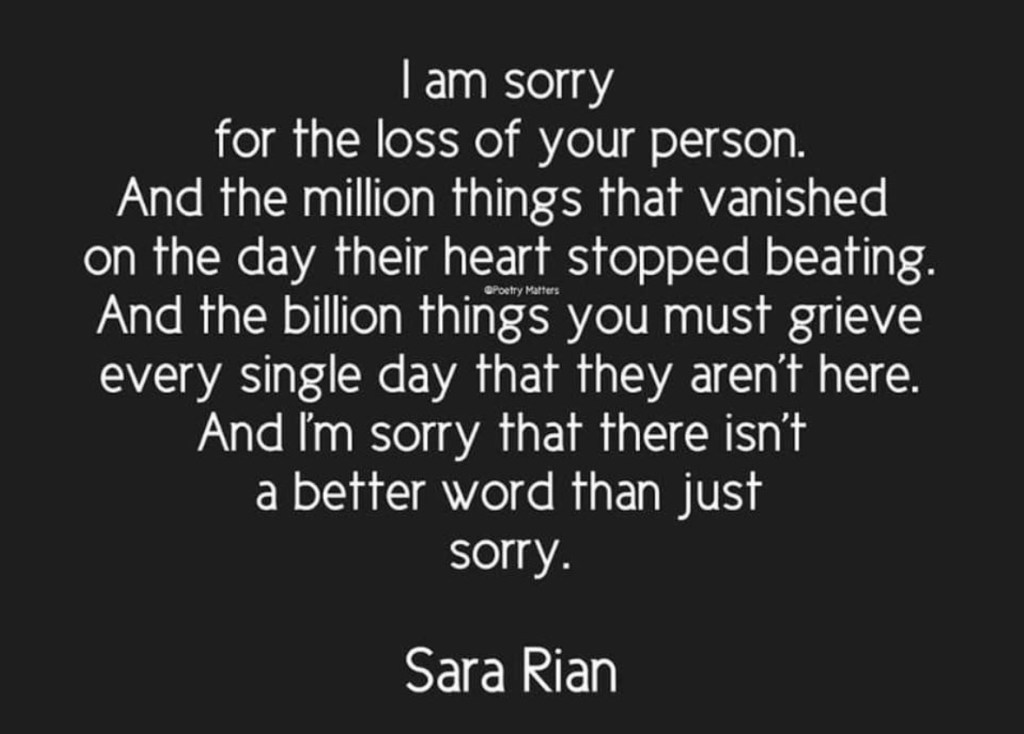
Ok. I’m back. This all reminded me that a couple weeks ago I asked my Marco Polo widow group whether or not it they like to talk about their spouses.
For me, I love to talk about Mark and I don’t mind talking about his battle with cancer and even his death. I have gone to his grave once a month. Obviously I write a public blog with the hope that the lessons I learn will be a benefit to others.
Another lady who has been widowed 7 or 8 years said that she didn’t want to see anyone for three years. It was six years before she visited his grave. She doesn’t like to talk about it.
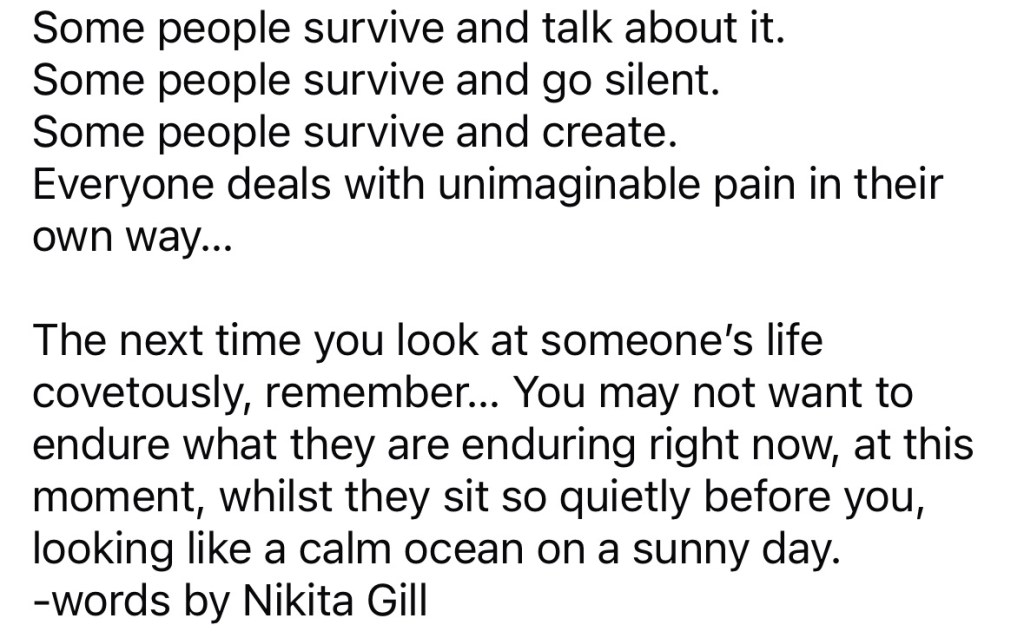
This tells me that my own experience does not make me an expert by any means. We are all unique in our relationships and in our grief. I shared this particular article because he spoke in general terms and I think he was accurate. From there how do you behave or how do you help? I would suggest prayer as a starting point.
I have also heard from several people that they wanted to be treated like they were before – as a normal person with something to contribute. How do you balance this with the compassion that they need? I don’t know.
The article said losing a spouse is the #1 most difficult life event that we will experience. That’s huge and then we don’t know how to deal with people or what to say. Maybe this is the #1 most difficult thing for anyone trying to think of how to respond? Personally I assume everyone is sincere in their efforts to be understanding and I can appreciate the sentiment.
My conclusion is that there is no conclusion except keep trying. Don’t forget them and don’t assume everything is fine now.
Oops. I almost wrote a conclusion. Instead I am going to leave this as is and let you make your own conclusions.
 Learning-Laughing-Loving-Life